October 6, 1977: The Milwaukee SAC wrote a 10-page memo to the director and section chief Edwin J. Sharp, indicating they were opening a new RICO case “which shall entail a proposed undercover project.” They proposed a code name (redacted) for this. The SAC said Frank Balistrieri was involved in a “concerted effort to take over the vending and jukebox industry” in Milwaukee. The murders of Fazio and Maniaci, as well as the bombing of Vincent Maniaci, only heightened his reputation. Victims of the takeover “stand in fear of furnishing any information” because Balistrieri’s methods “discourage any legitimate competition.” The memo listed five people involved in the takeover, but only two (Balistrieri and Steve DiSalvo) were unredacted in my copy. The SAC further said he knew the FBI was looking into untaxed cigarettes and Wisconsin was a distribution area – there was possibility these cases overlapped, considering Balistrieri operated cigarette vending. Informant background was included (all redacted), and the SAC believed this angle would bring down Frank Balistrieri and financially “cripple” the Milwaukee Mafia.
October 26, 1977: The director of the FBI wrote a memo to the Milwaukee FBI in response to a proposed operation to infiltrate Frank Balistrieri’s “takeover” of jukeboxes and vending machines. The response indicates that Milwaukee wanted a code name that had already been used elsewhere. The director said that, at most, two undercover agents could be provided from outside the Milwaukee area, but supporting personnel would have to come from Milwaukee, so it was suggested to look at the resident agencies for those roles. The director was not opposed to Milwaukee’s proposal, but warned them it was an “ambitious undertaking” that would be “difficult” and it may be easier to achieve goals by using an existing source (e.g. An informant).
December 2, 1977: The Milwaukee SAC responded to the director’s memo of October 26. It’s five pages and my copy is completely redacted, but it appears the undercover operation was put into effect because the one paragraph visible says the undercover agents will interact with the Mafia “soon.”
January 11, 1978: As part of their undercover project, the FBI opened a designated subfile for “all information relating to locations where Frank Balistrieri has vending equipment.”
February 21, 1978: The Milwaukee SAC sent a 3-page memo (pretty much all redacted) to the director of the FBI outlining the “cost survey” done for the undercover operation. This included “business expenses for undercover agents,” presumably the cost to start the fake vending machine business.
February 24, 1978: Edwin J. Sharp writes a 4-page memo to “Mr. Moore” approving the undercover operation in Milwaukee. Much of it is redacted, but we learn that Milwaukee has advised that no agents in Milwaukee or in the resident agencies would be suitable for the undercover role, due in part to security concerns. Sharp also mentions a similar undercover operation is ongoing in Phoenix, and he felt it was imperative the agents chosen for Milwaukee meet the undercover agent(s) in Phoenix to learn what they could from them. (It is not clear in what way the operations were “similar.”)
March 8, 1978: The FBI director wrote to the Milwaukee SAC formally saying their undercover operation was authorized and would be funded. The director requested weekly updates on the operation, and wanted to have on file the new identities of the agents, including their fake SSN, drivers licenses, birth dates, car VIN numbers and more. The agents were to be chosen by the “Selective Operations Unit.” To keep matters confidential, all information was to be in sealed envelopes only visible in Milwaukee by the SAC and only visible at headquarters by section chief Edwin J. Sharp. (There’s a note on there that says, “All personnel usage should be charged to the Organized Crime Program in your TURK submissions.” TURK is the Time Utilization Record-Keeping system.)
March 23, 1978: The FBI director wrote a memo to the Milwaukee FBI and Chicago FBI explaining that agent (redacted) in the Chicago office was being considered for the Milwaukee undercover job. The agent was to travel to Milwaukee at his earliest convenience and be given two or three days in Milwaukee to have the operation explained to him. He would then return to Chicago. Milwaukee FBI also had to evaluate the agent to see if he was right for the job, and alert the Selective Operations Unit if he was. The next day, the agent was “thoroughly briefed” in Milwaukee and all agreed there were “no insurmounted obstacles” to the mission. Agent was to be transferred to the Milwaukee division and operation expected to start May 1, 1978. (Agent’s name is redacted, but looks to be about four letters long. This is likely Agent Cobb.)
April 12, 1978: The FBI opened a subfile in its undercover investigation called “Confirmation of Opinions and Discussions with Strike Force Attorney.” Another subfile was opened the same day for “Consensual Monitoring, to Include Not Only Body Recordings But Body Transmitters, Consensual Telephone Recordings.”
May 9-12, 1978: An agent from the Detroit FBI was in Milwaukee being briefed on the undercover operation in Milwaukee. It was hoped the Detroit agent would join Gail Cobb. The meeting went well and the Milwaukee office wanted his transfer. They hoped it could be a “permanent” transfer, meaning he would be needed longer than six months. The Detroit office agreed with this.
In June 1978, FBI Agent Gail Cobb (as Tony Conte) applied for a vending machine license. Best Vending was at 1531 North Farwell.
June 8, 1978: An FBI agent from Dallas was in Milwaukee to be briefed on their undercover operation. He was needed “in order to assist in establishing credentials for our operatives.”
June 17, 1978: A Milwaukee FBI agent (presumably Cobb based on context) was in New York City on a personal matter.
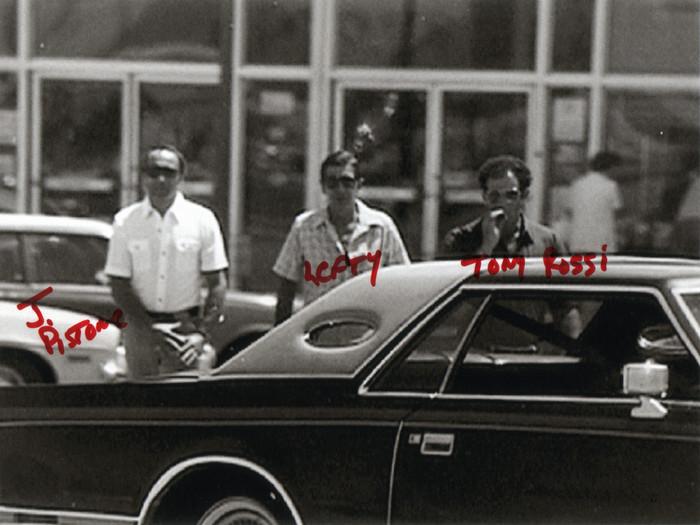
June 19, 1978: A meeting was held between Cobb, Pistone and Ruggiero where Ruggiero told Cobb he was “crazy” to go into vending in Milwaukee without the backing of the mob. Ruggiero convinced Cobb to pay him money to “entertain” the right people in order to get a “sit down” and approve his business.
June 21. 1978: The Milwaukee Office notified headquarters that the undercover agents operating in Milwaukee had discussions with New York Mafia representatives and attempted to connect them to Milwaukee. The goal was a “sit down” for New York and Milwaukee mob figures to discuss investments. (It was later argued by the defense that the FBI paid Ruggiero, but at no time did any Balistrieri ever get a penny from Cobb.)
June 22, 1978: The Milwaukee Office sent a teletype asking for the installation of a Concealed Automobile Transmitter (CAT) and NAGRA tape recorder on June 26. Headquarters responded the next day indicating that the Technical Services Division (TSD) did not have a NAGRA available, though they were in the process of making a bulk purchase of them. Furthermore, parts needed for a CAT were currently out of stock. Headquarters said the request would be filled, but the June 26 date was impossible. In addition to the shortages, a Cadillac required three days in the shop for CAT installation and testing.
June 28, 1978: The CAT situation changed and an FBI electronics engineer (name redacted) was flow into Milwaukee via North Central Airline Flight 423, arriving at 11:55am.
July 19, 1978: An FBI agent traveled to Milwaukee and was expected to stay until July 25. The record is redacted, but it was concerning the undercover operation and the agent may have been from Dallas.
On July 29, Cobb was brought to Snug’s and was met there by Peter Balistrieri, who brought him to a large round table in the northwest of the restaurant near the front window. Frank Balistrieri showed up 45 minutes later. After Cobb was introduced to Frank Balistrieri (as Tony Conte) by Ruggiero, Balistrieri pointed a finger at Cobb and stated, “I know all about you – we been looking for you all week. You had the nerve to move into my town with my business even right here in my block. I know all bout you – you bought three machines, paid cash, got a place on Farwell that’s been empty. We figured you were the G. They told me you were a tall, good-looking fellow, well-mannered, moving in with the vending business right here in the middle of my town, right in my block.” Frank then said to the others, “We were gonna hit him —we didn’t know what this was about —we thought he was the G.”
In the presence of Cobb, Peter Balistrieri, Joseph Zito, Charles Vince, Phil Emordeno, and Benjamin Ruggiero, Frank Balistrieri stated, with respect to August Palmisano, “he called me a name —to my face”; he was “arrogant” and “now they can’t find his skin.” In the same conversation, it is reported Frank Balistrieri stated, with respect to Vincent Maniaci, “he was an informer too.” Leaving Snug’s, Leftie slapped Cobb on the back and said, “You’re a lucky man.” The Rockford guys agreed, telling Cobb he was lucky – he was going to be killed, but now he was Frank’s partner. (Records suggest this meeting was recorded but the tape was “garbled” and unusable, which is highly coincidental the most damning statements are the ones the recorder failed on.)
August 3, 1978: Ruggiero told Cobb concerning his vending deal, “You’ll be known all over Milwaukee in every, every, every joint. But never mention their names at all. It’s your business.” This same day, one of the agents heard Frank Balistrieri tell someone, “This is not an idle promise, my friend. You’ll become the union president.”
August 4, 1978: The FBI headquarters sent a memo to Milwaukee saying the undercover agent (presumably Cobb) had “full authority” to cease being undercover at any time.
August 9, 1978: A conference was held between the FBI and the Chicago Strike Force concerning the progress of the undercover operation in Milwaukee. The Strike Force attorneys believed that evidence was present of RICO violations and conspiracy to violate RICO statutes. The investigation was ongoing, but it seems clear by this point they had enough to proceed with charges if necessary.
August 14, 1978: An FBI radio maintenance technician arrived in Milwaukee via United Airlines Flight 675 to assist in the undercover operation.
August 16, 1978: Joseph Balistrieri told Cobb, “I’m going to re-emphasize that there will be no interest in Best, other than your interest, until such time” as the 50% option was executed. It appears this is around the time the option was created.
August 23, 1978: The five-page Best Vending option agreement was checked for latent prints and none were found. (I assume they were looking for Frank’s prints, as there would be nothing incriminating about Joe or John.)
On August 25, 1978, Special Agents Gail Cobb and Joseph Pistone of the FBI, acting in undercover capacities, and Benjamin Ruggiero went to Snug’s Restaurant in Milwaukee, where they observed Balistrieri seated at a table with Steve DiSalvo and others. Balistrieri motioned Ruggiero over to his table, and Cobb and Pistone remained in the bar area. After about twenty minutes, Cobb and Pistone were escorted to Balistrieri’s table and Pistone was introduced to Balistrieri and DiSalvo. After this meeting, Ruggiero told Cobb and Pistone what Balistrieri had said to him before they were escorted to his table. Ruggiero’s statements were recorded en route from Snug’s to the Midway Motor
Lodge in Agent Cobb’s automobile. In this recorded conversation, Ruggiero repeated in substance that Frank Balistrieri had told him that football was the biggest thing in Milwaukee and that he (Balistrieri) had his own “office” which he wanted to discuss with Ruggiero and Pistone. Agent Pistone, experienced in these matters, understood Balistrieri’s reference to “office” to mean that Balistrieri had his own bookmaking operation.
On August 27, both Joseph Pistone and Gail Cobb (while acting undercover) went to the Peppercorn restaurant with Frank Balistrieri, and Balistrieri introduced them to Peter Picciurro. Balistrieri said he had not seen Pitch since “the guy got blown up” because they were “gumbas – buddies – real close.” Steve DiSalvo was there and said they were thinking of charging bookies $1,000 per week to operate, because all the bookies were stool pigeons. DiSalvo said, “We can’t kill them all – we would need Castro’s army to kill all the stoolies in Milwaukee.” Balistrieri said no one ever lived to be a witness against him, and DiSalvo added that no one ever put “a second foot” on the witness stand and lived. Pistone was offered a position as a manger in Frank’s gambling operation. The agents were invited to dinner at Frank Balistrieri’s house.
On the evening of August 28, 1978, at Ruggiero’s direction, Cobb made arrangements to meet with Balistrieri around 10:30pm to advise him that Pistone would not be taking over the bookmaking operation. The reason given is that Pistone didn’t think he could handle Wisconsin winters. Upon learning of this fact from Cobb, Balistrieri said he would have to make some other kind of arrangements to replace “the guy that had it”. This statement indicated Balistrieri’s continuing intent to run his sports bookmaking business during the 1978 football season.
On the evening of September 13, Frank told Ruggiero and others he “flies off the handle” when someone mentions the FBI. They then went for a drive and when they reached the intersection of Lake and Woodstock, Frank “pointed to the three houses on Lake Drive and the three or four houses on Woodstock” and said, “I own all those houses.”
September 23, 1978: A special agent and radio maintenance technician flew in to Milwaukee to help with the undercover FBI operation. They arrived at 12:42pm via Northwest Flight 319. The file suggests they were sent from Washington, DC. What exactly they were doing is unclear, but the RMT was granted up to 24 hours of overtime for the purpose of installing a NAGRA recorder.
October 2, 1978: Joseph Balistrieri wrote a letter to Cobb instructing him “to stop conducting any business on behalf of Best until the sensitive areas can be worked out.” This effectively ended their brief partnership in Balistrieri’s opinion. (The Seventh Circuit specifically rejected that reading, holding that the letter “at best merely suspends the conspiratorial conduct and does not establish a permanent cessation” of the conspiracy.)
On October 11, 1978, Special Agent Gail Cobb (as Tony Conte) had a phone call with Barbara Bertram and it was recorded. Barbara said to him, “You do your job and, as much as I don’t like it, I’ll just stay in the backlines.” Cobb responded, “As long as you understand it, because it’s tough for me to sit there beside you or stand there beside you and play a game, and think maybe you don’t know what’s going on.” Barbara then said, “Tony, all I want to do is be with you.”
November 11, 1978: After the Best Vending deal was called off, Cobb met with Joseph Balistrieri. Cobb said, “Joe, it’s obvious that I’ve offended your father. Alright?” Joe responded, “It’s news to me. No one knows what goes on in my old man’s mind, he’s very uncommunicative… It happened that everybody saw you with us, you really became identified with us and we more or less blew our cover.” Cobb then said, “I think a lot of your father. Number one, I think a lot of his position. I would kill for your father. I think a hell of a lot of him. If there’s anything I can do, you know.” Joe said, “Believe me. Let me tell you something. My father isn’t bashful.” Cobb offered to “cut off my arm” for Frank.
February 14, 1979: New York FBI sent a memo to the Milwaukee FBI saying the undercover work in Milwaukee was completed. Though not explicitly stated, it seems this put Milwaukee in a “wait and see” position – if Joe Pistone was still active in New York, it would jeopardize that investigation to prosecute Balistrieri at this point and reveal the agents.
August 9, 1979: An internal FBI memo discussed plans to arrange a meeting with Benjamin Ruggiero in November to turn him into a cooperating witness. If he refused, a federal grand jury would be launched immediately. This same memo suggests that Agent Cobb was “in hiding” near Miami so he couldn’t be found by Milwaukee or New York mobsters.
Frank, Joseph, and John Balistrieri, plus Benjamin Ruggiero and Mike SaBella, were charged with conspiring to extort money and a one-half partnership interest in Best Vending Company. Ruggiero pleaded guilty, SaBella was acquitted, and after a six-week trial all three Balistrieris were found guilty on both counts. But this is all for a future episode…