Howard Meister was part of a prominent Milwaukee family, wealthy and politically connected. A biography of Meister could really tell the story of Milwaukee in the 1960s. But this is the Milwaukee Mafia podcast, so we’re not going to be talking about his accomplishments… we’ll focus on when Meister and his bank crossed paths with the Balistrieris and state law enforcement.
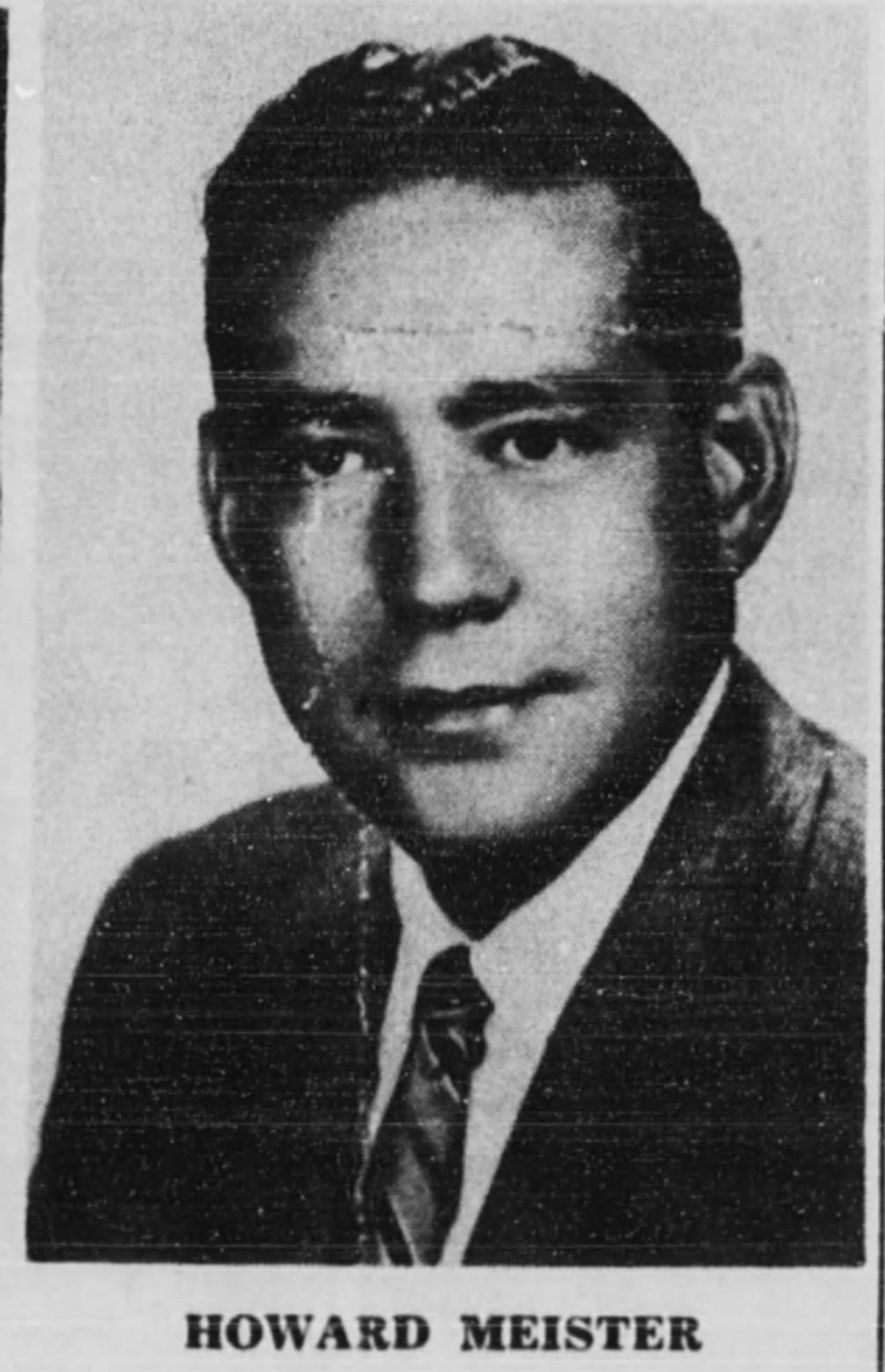
Meister was a high-ranking member of the Democratic Party in Milwaukee and a close friend of long-time mayor Henry Maier. He became a bank president in 1956 after buying the majority stock of the bank. He was chairman of the county party in 1960. He also served on the state’s Real Estate Commission, being appointed by Governor Gaylord Nelson. He was active in the National Foundation for Infantile Paralysis and was a member of the board of directors for Temple Shalom. In August 1960, he lead a voter registration drive. He gave a speech saying that only 62.1% of Milwaukee’s eligible voters were registered, one of the lowest rankings in the country.
June 1966, following a grand-jury investigation in Madison by assistant AG LeRoy Dalton, Meister was charged with bribing two Republican assemblyman, Paul Alfonsi (Minocqua) and Willis Hutnik (Ladysmith) to get their vote on a “branch banking” bill. Governor Warren Knowles said the charges were “shocking” because Wisconsin had a history of clean, uncorrupted government.
On May 5, 1967, charges of bribery were dismissed because witness Dorothy Effinger was too sick to testify. Meister was later tried in Madison on charges of unlawful lobbying and was acquitted.
Immediately following the dismissal of the charges, Meister held a meeting in the courtroom with the members of the news media at which he distributed typewritten copies of a statement:
NEWS RELEASE FOR IMMEDIATE RELEASE BY HOWARD J. MEISTER
“Eleven months ago, I was indicted by a Grand Jury, illegally constituted, and immoral in every sense of modern day terminology conceived by gestapo leader, LeRoy Dalton, who is now slithering under his rock.
“Today, everyone knows that any and all charges made against me were groundless and conceived in the evil minds of those who thought that through illegal means they could successfully smear me.
“It is now my duty to inform the public that the gestapo, the cancer in the Attorney General’s office must be cut out. I for one shall lead that fight, and good men shall join me.
“I must further state that Miss Dorothy Effinger, a known extortionist, is no sicker today than she was seven days ago when she whistled and danced in the halls of the Dane County District Attorney’s office. Less than twenty-four hours before the start of this trial, she went over the facts of her extortion attempts of me with the District Attorney, with no claim of illness.
“Her perjury before the Grand Jury under the ringmaster Dalton has agonized my mother, my lovely wife and my four children to a point I cannot comment on.
“Miss Effinger is a liar, an extortionist and is no more ill than she was eleven months ago when her perjured testimony was purchased for immunity for her various crimes. I challenge this female, Dalton and District Attorney Boll to deny the truth of my statement.
“I state, as God is my witness, I am guilty of being a good citizen, fighting for my rights. DA Boll, violating his oath of office, legal ethics and common decency, joined hands with Dalton and Effinger in furtherance of this campaign to smear me. I now state that any reports of threatening phone calls are false and were born of desperation in a last minute effort to prevent the truth from coming out. The only phone call the District Attorney Boll received was from `anonymous’ Dalton.
“Boll is a sham and a fraud and should be removed from office. He has violated his oath to protect the innocent and has shocked my conscience by openly and publicly admitting that the facts of her crime of extortion in this case were known by District Attorney Boll. He attempted to take a case to court in which he states he had only one witness and I state that that witness should be jailed by Boll.
“I state that Effinger tried to extort substantial money from me. The temptation to be relieved of these pressures through extortion was so loathsome that I am stunned that DA Boll can even talk to the press without first answering the simple question `Why don’t you prosecute Dorothy Effinger?’
“I now invite gestapo leader Dalton and S. S. Corporal Boll to investigate me, as I know they will, to continue their unorthodox crucifixion of Howard J. Meister.”
The statement was widely published by the media.
When does Dalton file lawsuit?
June 20, 1968: Dalton spoke publicly, saying he was removed from his $17,000 job as chief investigator of the state’s criminal division and placed in a position in the motor vehicle department because of political pressure put on AG Bronson LaFollette. LaFollette denied he was pressured by Meister, and said it was because of Dalton’s poor judgment in filing a $200,000 slander lawsuit against Meister. Dalton accepted the transfer rather than offer his resignation, and told the press that the administration would be changing soon. LaFollette was running for governor, meaning he could not also run for AG that year.
was on the planning committee for the first Summerfest and its first chairman in 1968.
Attorney Joseph Balistrieri tried to secure a $125,000 loan from Continental Bank and Trust in September 1968, but was turned down. Allegedly Frank Ranney, of Teamsters Local 200, called the bank and said a large deposit from the Teamsters would arrive if the bank granted the loan. On September 10, 1968, the Teamsters deposited $500,000 and Balistrieri’s $125,000 loan was granted. Two weeks later, Balistrieri was granted an additional $63,000 loan.
January 1969: Meister filed his response to Dalton’s lawsuit, denying he made “any false, malicious or defamatory statements willfully or with intent to injure.” He sais he “intended to state to the public that… LeRoy Dalton has a philosophy of law enforcement consistent with totalitarianism, that he uses threats and intimidation to obtain evidence, that he uses his office to investigate and to bring charges against individuals, which charges he knows he cannot prove, but nevertheless plans to ruin these individuals with adverse publicity.” Meister denied that Dalton “has a good reputation in his profession or that he has a good reputation for being an honest, moral or conscientious American citizen or that he has consistently demonstrated respect for law or ethics.” Meister admitted meeting with AG LaFollette and asking for Dalton’s removal, but said he did so as a citizen and not using any political power or threat.
On March 7, 1969, Meister was submitted to an adverse examination by Dalton’s attorney, Carroll Metzner. Meister accused Dalton and Judge Michael Torphy of inducing Dorothy Effinger to provide perjured trstimony. He claimed after Effinger was franted immunity, she “changed her tactics” and tried to extort Meister for $50,000. He said he believed Effinger bribed Assemblyman Earl Elfers, but was not directed to do so by Meister. He had hired her as a lobbyist, but she was a “pathological liar.” Asked if he hired private detectives to follow Torphy or Dalton during the case, Meister said he had not but could not say if his attorneys did. Meister acknowledged being friends with Herb Kohl and that he had spoken with politicians in Madison to help get Kohl a store built in Madison, but no money or threats were involved. He testified about loans he made to Joseph Balistrieri totaling over $150,000. Balistrieri used the funds to purchase the Wayside Inn (722 North Water) and the Brass Rail (744 North 3rd). Of Frank Balistrieri, Meister said, “I know him. I don’t go out with him. If I know him and I like him I assume he’s my friend. There’s nothing wrong with the loans. They’re good mortgages. If you can come up with half as good collateral, I’ll give you one.” Meister also testified that he heard from attorney William Glassner that Dalton tried setting up a wiretap in Dr. Anthony Verdone’s office during a John Doe probe. Meister estimated his net worth at $2 to $2.5 million, but said, “I haven’t heard what the stock market did today.”
LaFollette was also placed under oath and admitted Meister told him, “I have got $3 million and I’m willing to spend every nickel of it to ruin Dalton.” Meister also told LaFollette that if Dalton wasn’t removed, Meister would “blow the lid off this thing and you’re going down the drain with him.”
August 1969, Meister sold off his interest in the Continental Bank and other businesses and moved to Hawaii. He held a going away party at the Pfister Hotel, with 750 guests.
November 1969, the libel suit went to trial for three days. Meister was not present the first two days. A subpoena could not be served on him – his mother said he was sick and in Hawaii. However, he did appear the final day and testified, doubling down on his claims that the state police were no different than the Gestapo. The jury was out four hours before awarding Dalton $275,000 – more than he asked for. On December 29, 1969, Judge Andrew Parnell reduced the amount to $151,749.98. Except for some $200, this judgment wasn’t paid.
June 4, 1970: In response to allegations that Joseph Balistrieri received a $125,000 loan from Continental Bank because the Teamsters deposited $500,000 the same day, Frank Ranney made a lengthy response that was printed in the Milwaukee Journal. “I have known the Balistrieri family for over 30 years – in fact, from the time Frank Balistrieri’s father and uncle signed their first contract with Local 200. My son even drove a truck for Mr. Balistrieri and became a friend of his grandson, Joseph Balistrieri, who is now a capable and successful attorney.” Further, “The West Side Bank has always been considered from its early beginning as a ‘union bank,’ a bank in which most unions kept their funds and conducted their bank business. It has always been operated by union-minded management. The bank has now moved from its old location at Third and Juneau to Eighth and Wisconsin and has changed its name to the Continental Bank and Trust… When I became a trustee of the pension fund, the president of Continental Bank (Howard Meister) asked if it were possible for them to receive consideration for another certificate of deposit. I forwarded the request to the executive secretary of the fund and subsequently a 90-day certificate of deposit in the amount of $500,000 was purchased from the Continental Bank by the fund.” Ranney added that no bank in their right mind would give a 10-year mortgage based on a 90-day certificate of deposit.
June 1971: Norman Skogstad and Gerald Boyle appeared for Meister before the Wisconsin Supreme Court, asking them to overturn the libel judgment. The majority of the court upheld the verdict and Dalton’s award, though two justices dissented. The dissent rested largely on the point that Dalton was a government employee and was being attacked for something he did as a government employee. Meister was within his right to criticize the government, even with his strong language. (I tend to agree with the minority here.)
Frank H. Ranney, secretary-treasurer of Teamsters Local 200, testified before the grand jury for thirteen minutes on Thursday afternoon, July 22, 1971. Twice during questioning he consulted with his attorney, David L. Uelman. Although Ranney had denied the allegation in the Wisconsin Teamster newspaper, he had been accused of helping Frank Balistrieri secure a $125,000 commercial loan from Milwaukee’s Continental Bank and Trust Company in September 1968. Another Teamster official, not identified, testified for an hour.
September 7, 1971: Sally Papia had asked Herb Krusche to bring Leroy Dalton with him to lunch some time so she could congratulate Dalton on winning his lawsuit against banker Howard Meister. She said she had some information that may be help to Dalton and they could “fix Meister’s wagon.” Because Dalton was in Milwaukee September 7, the two men visited Sally. She sat with them at dinner for a long time, and openly discussed Meister, Frank Balistrieri, Frank Buccieri and “E.S.” Sally said she dated Meister (who was married) around 1968 and Frank Balistrieri did not like him. Sally allegedly told Frank to be nice to him, because Meister could some day be “family” (Sally saw herself as Frank’s goddaughter). Frank then began being friendly with Meister and Sally felt that Meister was just using her to get to Frank, and to get union funds deposited in his bank. Sally was asked what connection Frank had to the union and Sally said, “You know my godfather has friends in the Teamsters Union.” Meister had a strong dislike for Dalton and hired private investigators to dig up dirt on Dalton and Judge Torphy, who had previously investigated Meister. Sally further said “E.S.” was a cousin to Meister and operated a barber shop on the north side of Milwaukee, but moonlighted as a pimp. “ES” would supply girls when Meister entertained politicians and photos were taken to blackmail them. “ES” was also the person who fenced Sally’s jewelry after a recent burglary, she claimed. She said Meister would sometimes bet $2,000 at a time and the “Jews are worse (bigger gamblers) than the Dagos any time.” Meister had few friends left in Milwaukee – he owed Sally $25,000 – but was trying to get the Fazio family to open illegal gambling in Hawaii.
January 1976, Dalton had to sue Meister again, as Meister had not paid his damages and claimed to be broke. Dalton alleged fraud. In anticipation of the libel trial, Meister had engaged in transactions with the American City Bank and the Continental Bank (of which he was past president) such that American City Bank became indebted to Meister in the amount of about $2,500,000. The purpose of these transactions, in which American and Continental conspired with Meister, was to “liquidate and secrete” from Dalton assets upon which Dalton could have realized subsequent to judgment.
At the same time, Meister fraudulently induced his seventy-nine-year-old mother, Edith Meister, who was unable to read English, to execute notes in the principal amount of $1,100,000 to American City Bank. This effectively rendered her estate insolvent, depriving Dalton of access to the one-third interest in Edith’s estate bequeathed to Howard Meister under the terms of his mother’s will. This transaction also permitted Howard to partake of and dispose of Edith’s assets, and permitted American City Bank to “avoid compliance with the banking laws and regulations.”
Also prior to the rendering of judgment against him, Meister purchased real estate in Honolulu, placing the title in the name of attorney Norman Skogstad and wife Marilyn (neither of whom furnished any consideration) for the purpose of defrauding Dalton.
In 1971, during the pendency of the appeal, Howard Meister and Edith Meister entered into an “agreement.” This agreement operated to settle the indebtedness of Howard Meister to American City Bank, and to transfer his entire estate and the Honolulu property, rendering him insolvent. This was done without the knowledge of Dalton, for the purpose of hindering and defrauding him in the collection of his judgment. There were special relationships between the defendants, as of the time of the relevant transactions, as follows:
Howard Meister was past president of Continental Bank, secretary of Biltmore Building, Inc., an officer in Brief, Inc., and one-third owner of Seven-Up Milwaukee, Inc. Gae Meister is his wife.
Morris Meister and Ida Sack are siblings of Howard Meister. Morris is president of Seven-Up Milwaukee, Inc., president and treasurer of Brief, Inc., treasurer of Biltmore Building, Inc., and is executor of the estate of Edith Meister. Ida Sack is vice-president of Biltmore Building and secretary of Brief, Inc. The capital stock of Brief, Inc., is equally divided among Howard and Morris Meister, and Ida Sack.
Edith Meister was president of Biltmore Building, Inc. Raymond Dittmore is president of both Continental Bank and Universal Telephone, Inc.