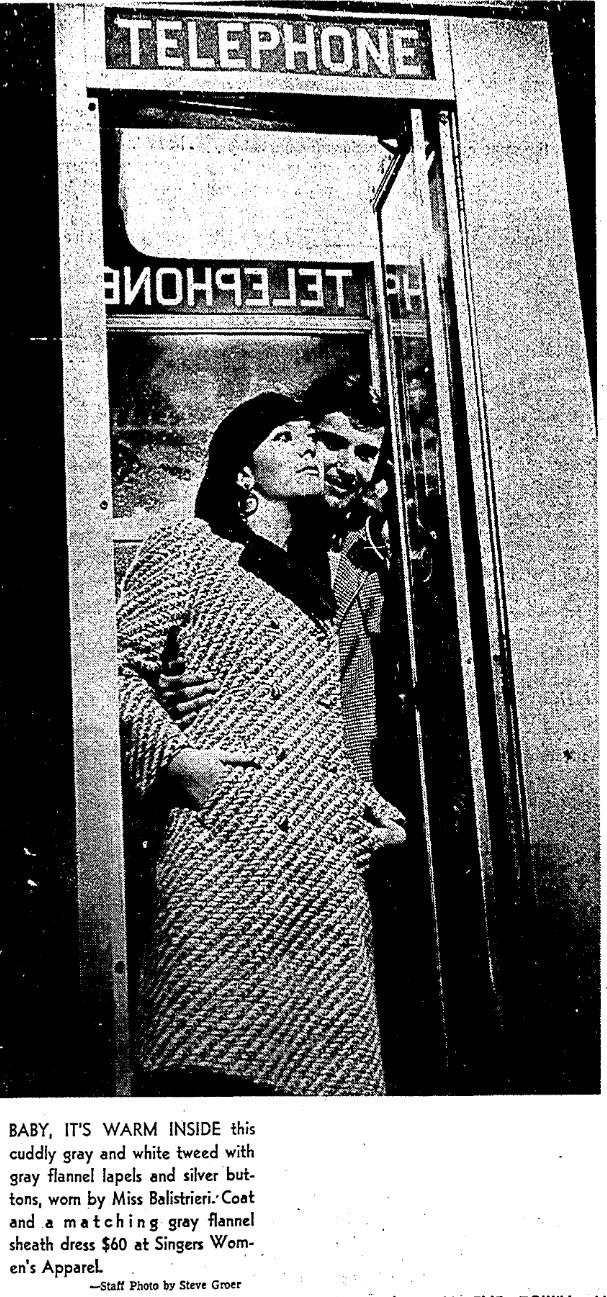
Benedetta learned the entertainment business from her father. “I used to do the payrolls with my dad on Sunday nights. He paid all the bartenders and waiters in cash. My job was to count out the change. He also taught me how to open the safe when I was a kid. There was a safe at the house and the safes at the clubs, and the bartenders used to get a kick out of me. I was like, I don’t know, 7 or 8? And I had these little hands and I could open the safe.”
Benny never finished college. Instead, she went into the concert promotion business at the Scene, her father’s downtown club. Soon she was bringing top-name rock stars to town: Jimi Hendrix, Cream, the Rolling Stones, Jethro Tull, and more. She lived with younger sister Cathy in a huge house allegedly owned by her father on Lake Drive.
Booking bands for the Scene is likely how she met Charles Seth Gottlieb.
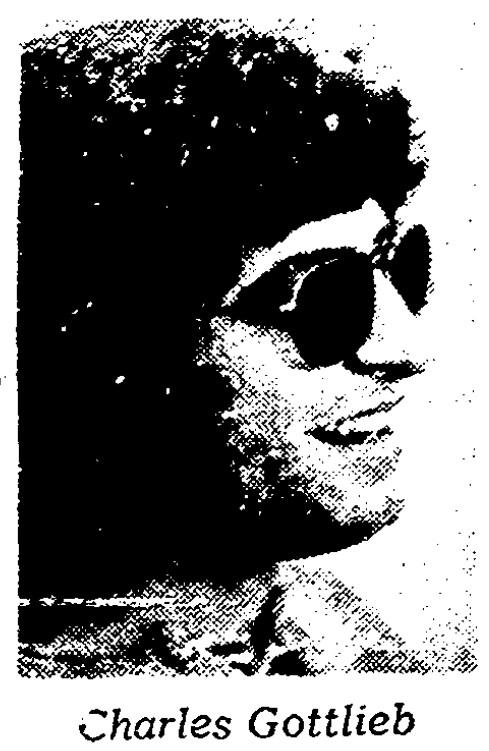
September 1971: After a successful test run with Jethro Tull, Gottlieb signed a contract to bring more rock acts to the Performing Arts Center. Prior to this, it was widely thought that rock and the PAC didn’t mix. “There is plenty of precedent for this type of contract,” according to Richard A. Hoover, managing director of the center. “Marcus Theatres Management, for example, has the exclusive on Broadway touring shows here… Gottlieb has the experience and know-how to bring in the sellout attractions and maintain his rapport with the customers, who have engaged in abusive activities in other halls.”
Gottlieb told the press he hoped to get one rock act per week at the PAC. “When I came here a year and a half ago, I started bringing in heavy underground rock groups to the Scene. It bombed. Here the kids buy the records but they don’t buy the tickets. With the PAC, I think we’ll be able to bring the kids in.” Gottlieb was described as a 25-year old native of “Forest Hills, New York” (he does appear to have graduated there in 1964) who ended up in Wisconsin because he was attending the university, but dropped out before getting a degree. Allegedly, his only remaining credit was “a correspondence course in Spanish.”
Gottlieb continued, “The thing the booking agencies are looking for is the promoter who is going to take a risk on an act that is not a big name. I can make money if things go well. In a place this size, the hall doesn’t let you make any big money and the act doesn’t let you make any big money. I’m not ripping the kids off with my ticket prices – the act is. I’d gladly drop the prices if the acts dropped their prices.” He wanted to hold prices to $5.50 tops unless it was something like the Rolling Stones. Other cities have prices closer to $7.50.
And further, “When the kids got into the seats and sat down, they were really awed. This is not a big barn and they could see the act and hear it. You had stereo sound all over the hall. I fought with Jethro Tull’s management for three months to get them to go into the center rather than the Auditorium. I think the thing that finally sold them was the brochure I sent describing the center. This is a palace, it really is. I think the kids are going to start coming, and with a hall of this caliber, where the group likes the acoustics and the closeness of the audience, the groups will want to come here. This could put Milwaukee on the tour map.”
October 20, 1971: Gottlieb (under the banner of Concerts Midwest) was promoting the psychedelic rock band It’s a Beautiful Day (with J. Geils Band opening) at the Performing Arts Center. Tickets were $5. That same night, Frank Zappa was playing with Fleetwood Mac at the Arena. Those tickets $5.50. Gottlieb also announced that rock band Mountain would be coming soon, supported by an Appleton band called Soup. Later in November, he had the Beach Boys, Yes and Jackson Browne coming. ($5 in 1971 is similar to $20 in 1998 or $40 in 2026.)
November 26, 1974: The Hair Company Limited was incorporated in Wisconsin.
November 1976, Charles Gottlieb and Benedetta Balistrieri were married at St. Rita’s Catholic Church. The Milwaukee Journal gave only one address (2212 North Lake Drive) which was Benny’s, but suggests they were living there together. Gottlieb was identified as operating “a downtown hair styling salon.” Benny was identified as “a daughter of Frank Balistrieri, the reputed leader of the Milwaukee underworld.” Their wedding reception at the Centre Stage seemed to go on for a week, Benny says, with a cake as tall as the flower girl, two Rolls Royces and 1,500 guests, most of them relatives and friends of her father, offering favors to her dad. (Surprisingly, the ceremony was not covered by the news.)
January 9, 1977: The Milwaukee Journal did a short write-up on the Hair Company, calling it “a Gatsbyesque world of high ceilings, Tiffany style lamp shades, natural wood floors and enormous plants. Plans are afoot to install an entire wall of mirrors and a bubbling bank of aquariums.” Rock music is played on the stereo there at volumes “from pleasantly palatable to thunderous.” The shop had 12 chairs, and Gottlieb told the newspaper that his clients included the California Angels and Oakland A’s. A haircut cost $10 and a perm was $25.
January 28, 1977: Gottlieb incorporated “Leslie West, Inc.” On February 15, 1977, he incorporated “Westly, Ltd.” What these were is unclear.
Adding to the confusion, there are two people named Leslie West associated with music. Mr. Leslie West, guitarist for Mountain, who was not from Milwaukee but frequently played in Milwaukee clubs as either headliner or support for acts like Steve Miller Band. And Ms. Leslie West, owner of The Rave, promoter at Riverside, Alpine Valley and other venues.
Early March 1977, Charles Gottlieb testified before a John Doe hearing looking into drug traffic in Milwaukee.
On March 15, 1977, two pistol shots shattered the window of the Hair Company at 5:30pm. The Hair Company, on the second floor at 324 East Wisconsin Avenue, was owned by Charles Seth Gottlieb, the son-in-law of Frank Balistrieri. Gottlieb immediately called his silent partner, Michael Haas, at his residence at 3240 North Gordon Place. Michael was not home (he was in Chicago), but his wife Marie informed Gottlieb that the home had also just been shot at with two shotgun blasts and four pistol shots. An anonymous source for the Milwaukee Journal said the shots “might have been related to a court trial in Denver.” (I have no idea what this means.) Police were shocked that no witnesses reported the Hair Company shooting – rush hour downtown on a Tuesday is not sneaky.
A day later, the police declared the attack “warning shots” not meant to hurt anyone. They said Haas refused to talk and Gottlieb gave them evasive answers. One customer, who identified himself only as 23 and from St. Francis, said, “I was just getting my hair done. Two shots came through the window and everybody hit the floor. We just sat there for a while until someone called the police and we all went to the back room…. It sounded like a light bulb popping.” Benny later said the shooting was a mistake, the shooter delivering a message to an errant drug dealer who had incorrectly told his supplier he was part owner of the shop. (Presumably she meant Haas, but this isn’t clear.)
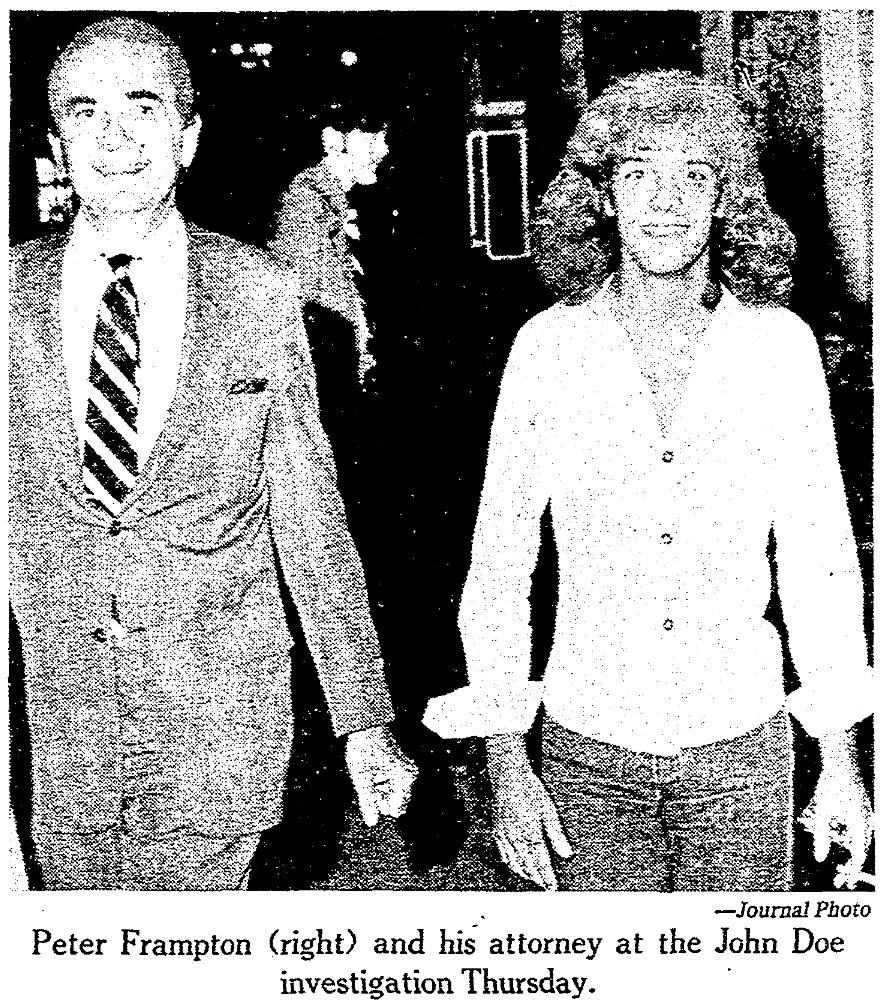
On August 11, 1977, rock star Peter Frampton testified in Milwaukee at the John Doe hearing investigating drug traffic (the same hearing going since at least March). He was asked about Charles Gottlieb, among other things, for about 40 minutes. Gottlieb was also called, and was joined by attorney Joseph Balistrieri. He was in front of Judge Ralph Podell for an hour. Frampton knew the Gottliebs because they were friends with Milwaukee native Penny McCall, Frampton’s girlfriend. When performing in Milwaukee this week, Frampton even wore a Hair Company jacket and the Gottliebs were backstage at the Arena. Frampton, only 27 years old, was one of the biggest performers in the world at the time, earning tens of millions each year.
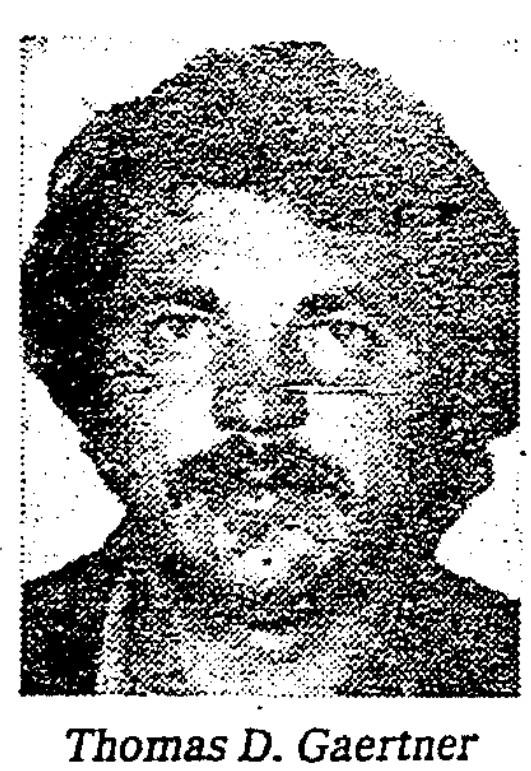
As of August 12, 1977, “several” people had been charged because of the John Doe. The Milwaukee Journal did not name the “several” but identified one man: Thomas D. Gaertner, 36, said to be “one of the state’s biggest marijuana wholesalers.” Gaertner was sentenced to three years in prison for possessing 162 pounds of marijuana after his business partner, Thomas H. Blank, turned on him. Blank testified to one trip where they drove 480 pounds back from Mexico. (Gaertner would achieve further notoriety in 1981 when he became loosely connected to the Lawrencia “Bambi” Bembenek murder trial. Gaertner was married to Bambi’s roommate.)
January 1, 1979: The Hair Company was in bad standing with the state and was later involuntarily dissolved. The business kept going anyway.
August 27, 1979: The IRS filed a $5,551 tax lien against the Hair Company after they failed to pay employee or Social Security taxes so far that year. The Milwaukee Sentinel spent one and a half paragraphs describing Frank Balistrieri, who had nothing to do with the shop or its tax problems.
October 17, 1979: Judge Ruth LaFave signed orders allowing the IRS to seize the assets of the Hair Company for $14,100 in unpaid employee and Social Security taxes. On four separate occasions, Gottlieb signed agreements to pay taxes owed and each time defaulted on the agreements.
May 5, 1981: The IRS changed the locks on the Hair Company and seized the firm’s assets on order of Judge Aaron Goodstein. Hydraulic styling chairs, shampoo chairs, hair drying equipment and more were carried out by agents. IRS spokesman Ronald Fleissner said the business was behind $29,800 in federal taxes. When asked, Fleissner emphasized the seizures had no connection to Frank Balistrieri, despite the newspaper’s insistence on referring to Gottlieb as his son-in-law.
April 1982: An article in the Milwaukee newspaper said Milwaukee musician George Busateri was writing and arranging for others, most notably Johnny Contardo of Sha Na Na. Busateri was married to Benny’s sister Cathy, which may be how she met Contardo.
In 1982, following a quickie divorce from Gottlieb in the Dominican Republic, Benny married Contardo in New York, then jetted off to Europe for their honeymoon. They settled in Los Angeles, where Johnny had property and a TV show.
Benny rubbed elbows with the rich and famous in Hollywood (she worked awhile on the staff of the “Dudley Moore Show”), as well as some of the Milwaukee celebs she’d met years ago. She worked in films and TV, on music videos and commercials. She traveled with Sha Na Na to South Africa and South America. She vacationed in Tahoe and Hawaii. (I find no confirmation of her working on ANY of those things.)
When Contardo was booked at Festa Italiana in 1987, Benny’s mother called and warned her not to return to Milwaukee. From prison, Joe threatened to fire the staff at the Shorecrest if they let her in. Eventually, Nina Balistrieri herself was let go as manager of the hotel – by her son, Joe.
When her mother was dying, Benedetta was discouraged from visiting and she was not notified of the death or funeral – only finding out later. Catherine said before she learned of her sister’s illness in April 2009 the two hadn’t spoken since 1993.
Benedetta Balistrieri will return once more when we discuss the lawsuit she had against her brothers over the family estate.